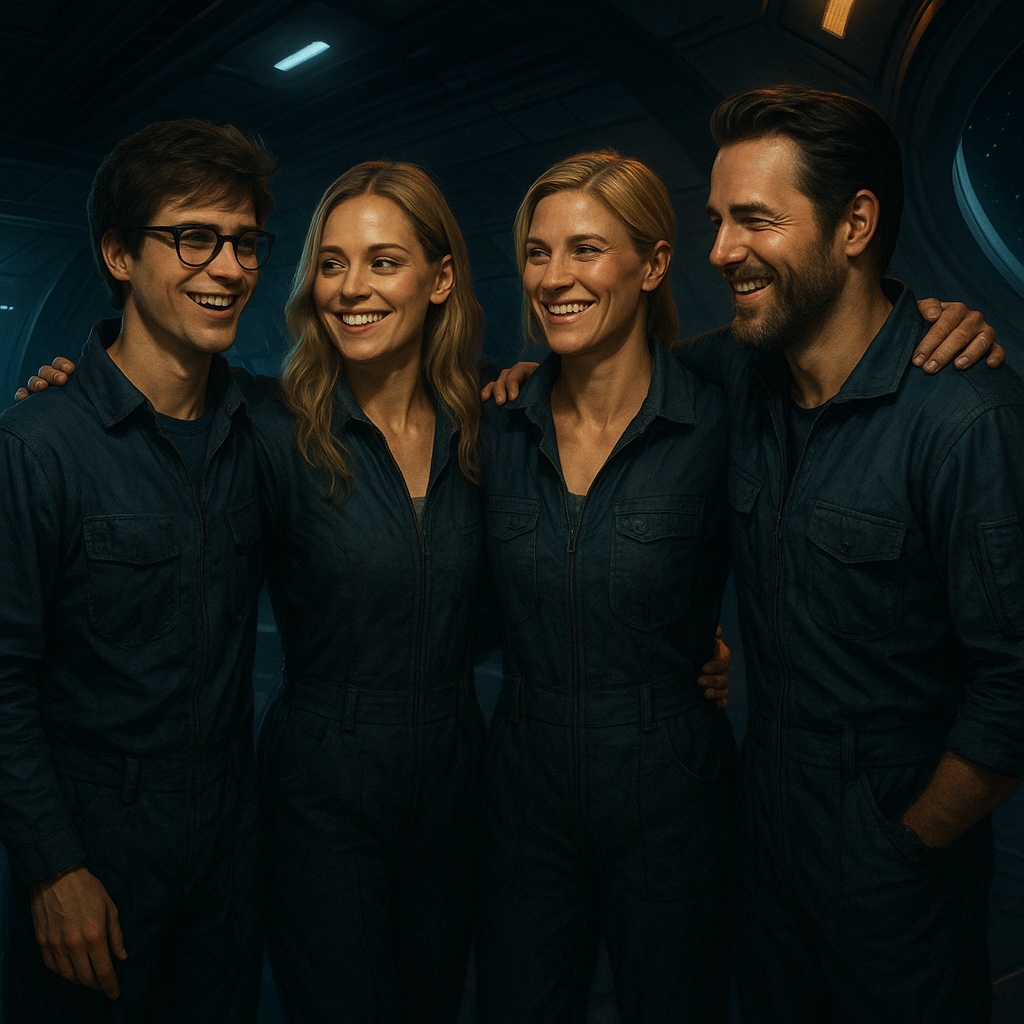
When you put people in high-pressure environments, whether it’s a moon base, a test flight at faster-than-light speed, or a cramped officer’s lounge, relationships form fast.
But for me, camaraderie wasn’t just something that happened in Galaxy’s Child. It was something I worked hard to build.
From the very beginning, I wanted the characters to feel like real people, not just crew members with name tags, but individuals who rib each other, support each other, and clash at times. Because that’s how teams really work, especially when lives (and egos) are on the line.
💬 Where It Started
Philip Anders, the outsider-turned-test pilot, needed more than a mission, he needed connection. That’s where characters like Dany, Mike, and Ava came in. Each of them challenges him in different ways:
Dany Crews pushes him to prove himself, but also sees something deeper in him. Their dynamic shifts from friction to something closer to respect, and possibly more.
Mike Parks becomes a reluctant mentor, offering tough advice and unexpected loyalty.
Ava brings warmth and emotional depth, asking the questions no one else dares to.
🎙 Real Dialogue, Real Dynamics
The key to making it feel real? Dialogue.
I wanted the banter to flow naturally, with a rhythm that reflected real friendship: inside jokes, subtle digs, unspoken trust.
Sometimes the best way to show camaraderie isn’t through a grand gesture, it’s through a glance, a quick line, or the silence that says “I’ve got your back.”
👨🚀 Camaraderie Under Pressure
Space might be cold, but the people navigating it don’t have to be.
By grounding the relationships in shared goals and emotional truth, I hoped to show that even in the most distant reaches of the galaxy, what connects us remains the same: trust, loyalty, and the kind of bond that’s forged, not forced.
Want to see those bonds in action?
Galaxy’s Child is available now in ebook, paperback, and hardcover:
 David P. Lloyd