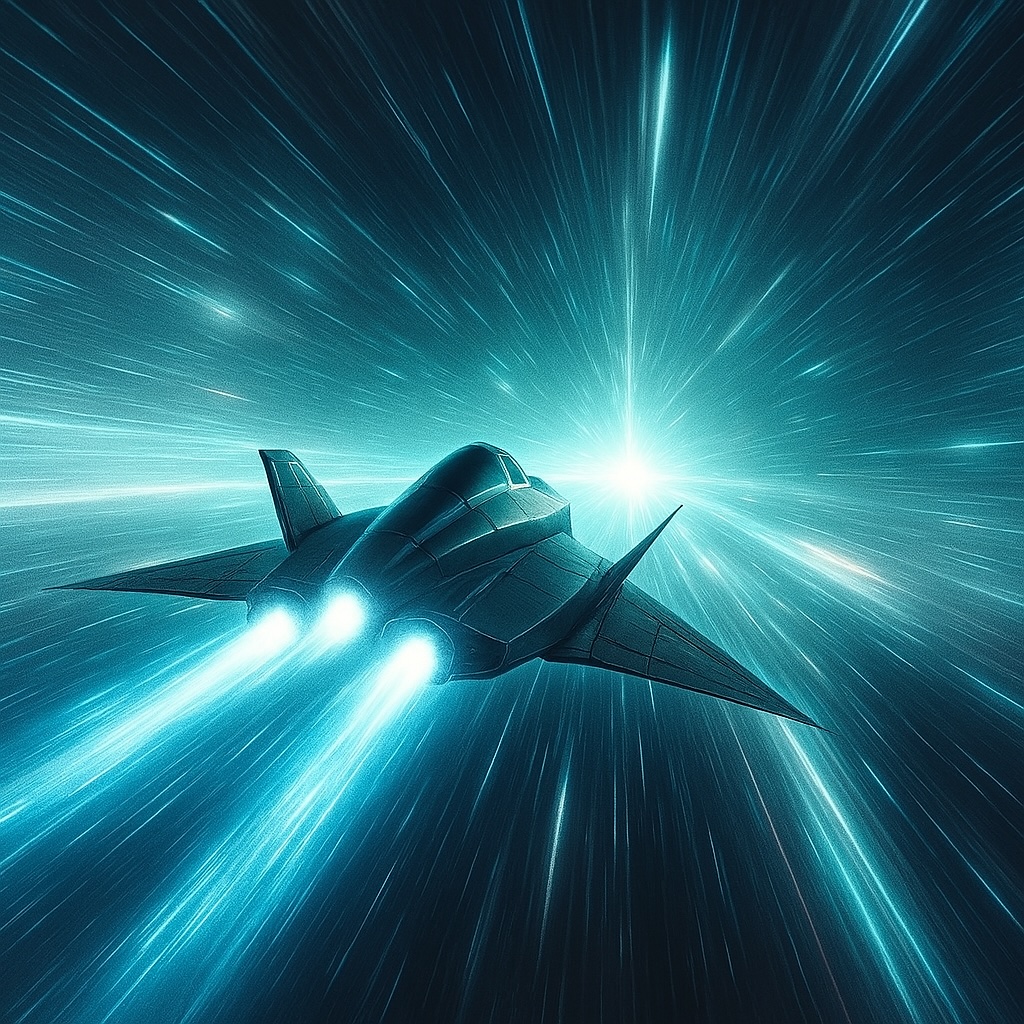
Faster-than-light travel has long been a staple of science fiction, and for good reason. It’s the gateway to distant galaxies, new civilizations, and the existential questions that come with leaving Earth behind. Without FTL, the universe remains a slow, silent expanse. With it, anything becomes possible.
In Galaxy’s Child, I knew from the very beginning that FTL had to be more than just a means of transportation, it had to matter. It needed to feel like a breakthrough, a discovery so monumental that the entire world would shift around it. And in a way, it does. The story begins with Philip Anders, a disillusioned MIT dropout, but once he becomes entangled in FTL development, everything changes, not just for him, but for humanity.
So why does FTL work so well in sci-fi?
Because it’s the ultimate what if.
What if we could reach another star in minutes instead of centuries?
What if we discovered we weren’t alone?
What if that discovery came at a cost?
Science tells us that breaking the light-speed barrier isn’t currently possible. Einstein’s theory of relativity puts a hard limit on how fast we can go, and anything approaching light speed requires impossible amounts of energy. But science fiction isn’t just about what’s possible, it’s about what could be. The idea of bending space, folding dimensions, or manipulating quantum fields gives writers like me the creative freedom to ask big questions.
In Galaxy’s Child, the FTL drive isn’t just magic, it’s built on theoretical physics, mathematical breakthroughs, and trial and error. I wanted readers to feel the weight of the science behind the engine, and the pressure it puts on everyone involved in the project. There’s tension between the military’s need for results and the scientific team’s insistence on caution. There are lives at stake with every test flight.
And there’s something else too, wonder. That feeling of awe when you realize you’re standing at the edge of the unknown. That’s the true heart of sci-fi and why FTL, impossible as it may be, keeps showing up in our stories.
If you’ve read Galaxy’s Child, you’ll know that FTL travel becomes much more than a plot device. It’s a symbol of ambition, danger, and ultimately, hope.
Let me know in the comments, what’s your favorite depiction of FTL travel in science fiction?
 David P. Lloyd