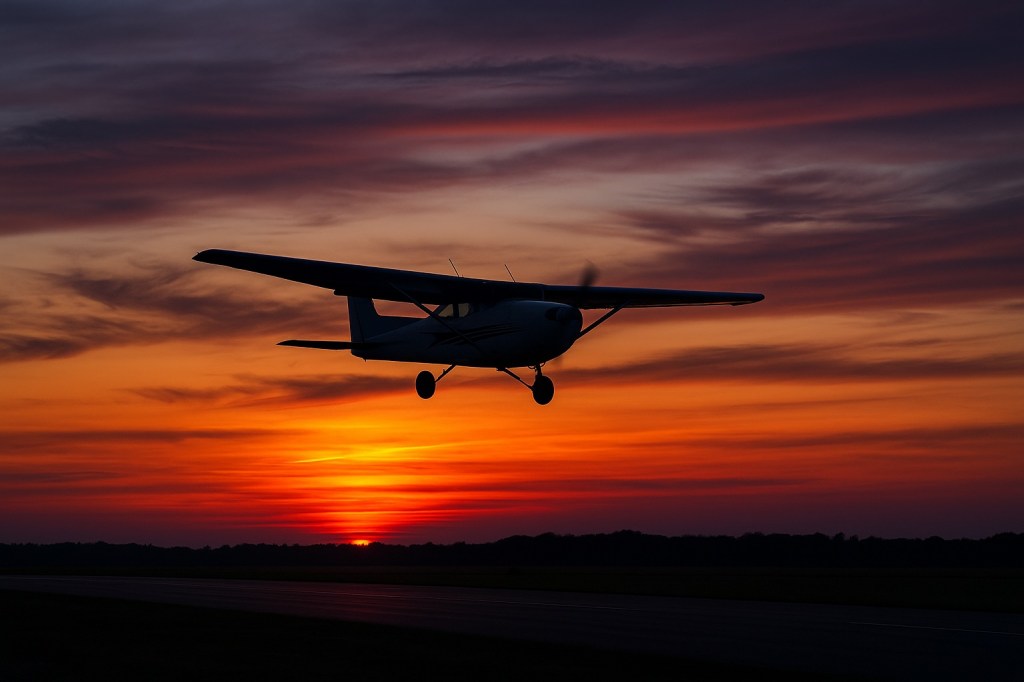
I’ve always believed that the most authentic stories come from lived experience, even in science fiction. That’s why, when I sat down to write Galaxy’s Child, I knew Philip Anders had to be a pilot. Not because it was convenient for the plot, but because aviation has been a part of my life since childhood. It only felt right that it should be part of his too.
I grew up on a lake, and from a very young age, I was obsessed with the floatplanes that took off regularly from the water. There were seven of them, and every time one fired up its engines, I’d bolt to the window or straight outside to watch in awe.
One day, when I was around five or six, a close family friend invited me into his hydroplane. I was beyond excited. Mid-flight, he turned to me and asked, “Wanna try flying?” I hadn’t even driven a car yet, but suddenly I was at the controls of an airplane. That experience lit a fire in me that never really went out.
As I got older, I had the chance to go on hunting and fishing trips where small planes, often Cessnas, were our only way in or out. On those trips, I was lucky enough to take the controls more than once (always with a pilot beside me, of course!). Each flight deepened my connection to the sky and strengthened my dream of one day becoming a licensed pilot myself.
In the early 2000s, I finally made it happen. I signed up for both the theory and practical components of flight training at the Mascouche airport. That period of my life taught me a lot, not just about aircraft systems and flight planning, but about decision-making, focus, and responsibility.
Many of the flying scenes in Galaxy’s Child were inspired directly by those lessons. While I didn’t live through anything as intense as Philip Anders did, real-life details made their way into several chapters, small touches that only another pilot might recognize, but which I believe add authenticity for any reader.
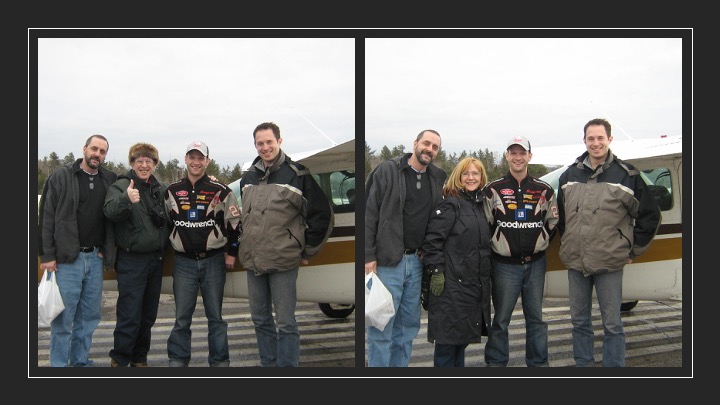
One particular experience has stayed with me to this day. I had to complete a navigation exercise. With two friends, we flew from Mascouche to Macaza, Quebec, in a Cessna 172, where I met up with my parents. After exchanging passengers, I took my parents for a short flight over their house and the lake and then landed again at the Macaza strip. When it came time to return home, the engine wouldn’t start because the starter had blown. After a few calls, the plane’s owner recommended I talk to the local flight school. The owner came out personally and, believe it or not, started the propeller manually with his hands. I’m still amazed he did that.
Since it was now dark, I was instructed to land at St-Hubert Airport because at that time, Mascouche’s runway wasn’t equipped with landing lights. But I opted to go back to Mascouche anyway because I really didn’t feel like paying the hundred dollar cab fair for the ride back to Mascouche! So, I turned off my transponder and flew the return leg. My plan was to land on the taxiway, which was lit. As I descended to about 50 feet altitude and flicked on my landing light, I realized I wasn’t over the taxiway at all, I was lined up over Highway 640! I can just imagine the drivers panic as a Cessna suddenly appeared above them! So I corrected, turned, and brought the plane down safely on the taxiway. Not exactly textbook, but we made it.
That kind of experience, being in command of a small aircraft, troubleshooting under pressure, adapting in real time, those are the kinds of moments I wanted Galaxy’s Child to capture. When Philip Anders trains, tests, and finally flies, I wanted readers to feel the tension, the thrill, and the personal responsibility that come with piloting. And a lot of that came from my own logbook, not just my imagination.
I might not be flying as often these days, but once you’ve had the sky in your blood, it never really leaves you. And that’s why it was so important to put it in the story.
Here are a few pictures of my Macaza adventure with family and friends!
 David P. Lloyd