From Apollo to Artemis, and Beyond
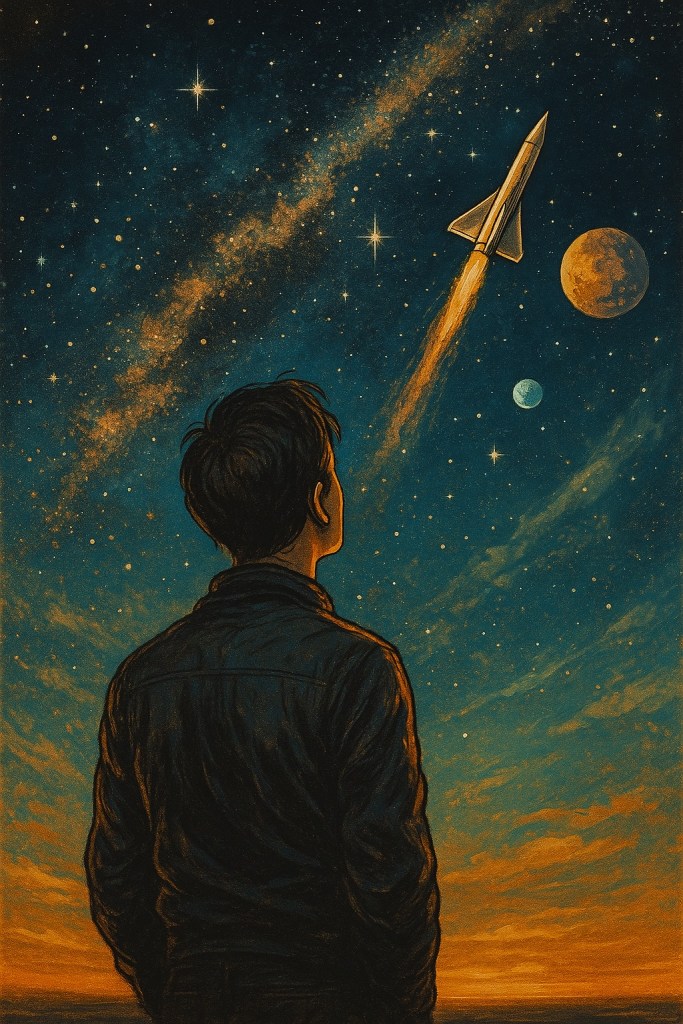
From the moment humanity first looked up at the night sky, we’ve been pulled toward the stars. In 1969, that pull became reality when Neil Armstrong set foot on the Moon. The Apollo missions proved what once seemed impossible, that humans could leave Earth, cross the void, and walk on another world.
Now, more than fifty years later, the Artemis program is preparing to return us to the lunar surface. But Artemis is more than a return, it’s a stepping stone. A testbed for technologies that may one day take us to Mars, and perhaps even further.
What fascinates me is how often our boldest achievements begin as stories. Jules Verne imagined submarines long before they slipped beneath the ocean. Flip-open communicators in Star Trek became the cell phones in our pockets.
Artificial intelligence, once only the domain of HAL 9000 or Asimov’s robots is now something we interact with every single day. And warp theory, once a piece of technobabble, has grown into real scientific papers proposing models for bending space-time.
The cycle is clear, science fiction dares us to dream, and science eventually catches up. This is one of the reasons why I wrote Galaxy’s Child. Not just as entertainment, but as part of that ongoing interaction between imagination and reality. The story revolves around the FTL drive (faster-than-light travel) not because it’s flashy, but because it represents the frontier where science fact and fiction might finally meet.
Apollo and Artemis remind us that the stars aren’t out of reach. Fiction reminds us why we should go. If history has taught us anything, it’s that stories matter and are a source of inspiration. They plant the seeds. They whisper possibilities. They show us what could be.
My hope is that Galaxy’s Child, in some small way, contributes to that cycle of inspiration. That someone reading it might one day decide to become an engineer, or a physicist, or a pilot and push us further than we’ve ever gone before. Because exploration doesn’t end, it evolves. And as long as we keep telling stories about the stars, we’ll keep finding ways to reach them.
 David P. Lloyd