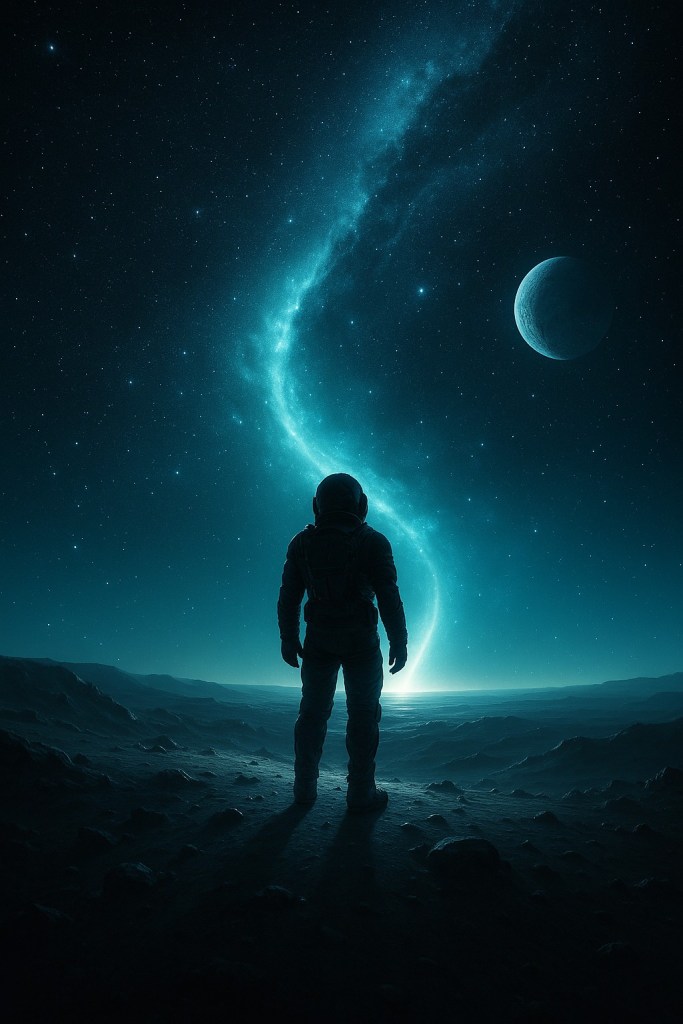
Space is beautiful, but it’s also silent, hauntingly and endlessly silent.
It’s one of the few frontiers that can inspire awe and fear in equal measure. Every photograph from the Moon, every image captured by the James Webb Space Telescope, reminds us how small we are. But what those images can’t capture is what happens inside the human mind when the vastness of space becomes more than a picture, when it becomes home, or worse, confinement.
The Silence of the Void
Astronauts often describe space as both breathtaking and lonely. Looking down at Earth from orbit gives them a perspective that few humans will ever know, the fragility of our planet against an infinite backdrop. Yet that same view can spark something unexpected, an ache and a sense of detachment.
Isolation isn’t new to humanity, but space takes it to another level. NASA’s long-duration missions and isolation experiments, like HI-SEAS in Hawaii or the Mars analogs in the Arctic, have revealed just how deeply solitude affects us. Disrupted sleep cycles, disconnection from time, and an almost spiritual longing for human touch, all are part of the cost of exploring the unknown.
We weren’t built for silence. Our biology evolved around sound, voices, movement, the hum of life. Take that away, and something inside us begins to unravel. Astronauts talk about moments when they stare at Earth and feel both closer to humanity and utterly alone. That contradiction is something I’ve always found fascinating, the idea that you can be surrounded by stars and still feel like you’re the only one in existence.
In Galaxy’s Child, Philip Anders experiences this paradox firsthand. Even surrounded by his crew, he often feels the quiet weight of distance, not just from Earth, but from who he used to be. That’s the emotional reality of space travel, it’s as much an inward journey as it is outward.
Despite the psychological toll, despite the isolation, we keep building rockets, planning colonies, and dreaming of Mars. The Artemis program is preparing to return us to the Moon, not because it’s easy, but because it’s the next step in understanding who we are.
Exploration isn’t just about expanding our territory, it’s about expanding our sense of purpose. Every mission, every launch, is a reminder that humanity doesn’t stop moving forward, even when the path is cold and silent. That’s why Galaxy’s Child was never meant to be just about technology or physics. It’s about people, about what happens when we leave everything familiar behind and confront the vastness of the unknown.
Philip Anders, much like the astronauts of today, faces both the wonder and the loneliness of discovery. The Moon base in his story mirrors the same psychological challenges faced by real explorers, the need to stay connected, the constant awareness of how far from home they’ve gone, and the quiet fear that some distances can’t be crossed at all.
In Book Two, that theme deepens. The physical isolation of space begins to mirror emotional isolation, questions of trust, connection and what it means to carry humanity’s light when there’s no one left to see it.
Space may test our endurance, but it also reminds us of our strength. The silence isn’t a void, it’s a canvas. Every transmission, every footprint on lunar dust, every dream of reaching another world is a message written across the stars, we were here, and we kept going.
Philip Anders’ story is just one reflection of that truth. His journey isn’t about escaping Earth, it’s about rediscovering what it means to be human when the stars are the only witnesses. Because even in the loneliest corners of the universe, our light still burns.
 David P. Lloyd