Science fiction is often about the big things. Faster-than-light travel, alien civilizations, artificial life, interstellar adventures and much more. But if there’s one thing I’ve come to believe deeply while writing Galaxy’s Child, it’s this; none of those ideas matter if the reader can’t picture them.
As a lifelong fan of sci-fi, I’ve read books that had brilliant concepts, but I struggled to stay immersed because I couldn’t see what was happening. The tech was cool, the plot was interesting, but the narrative clarity was lacking. So, when I sat down to write my own novel, I knew one thing for certain, I wasn’t going to leave the reader guessing.
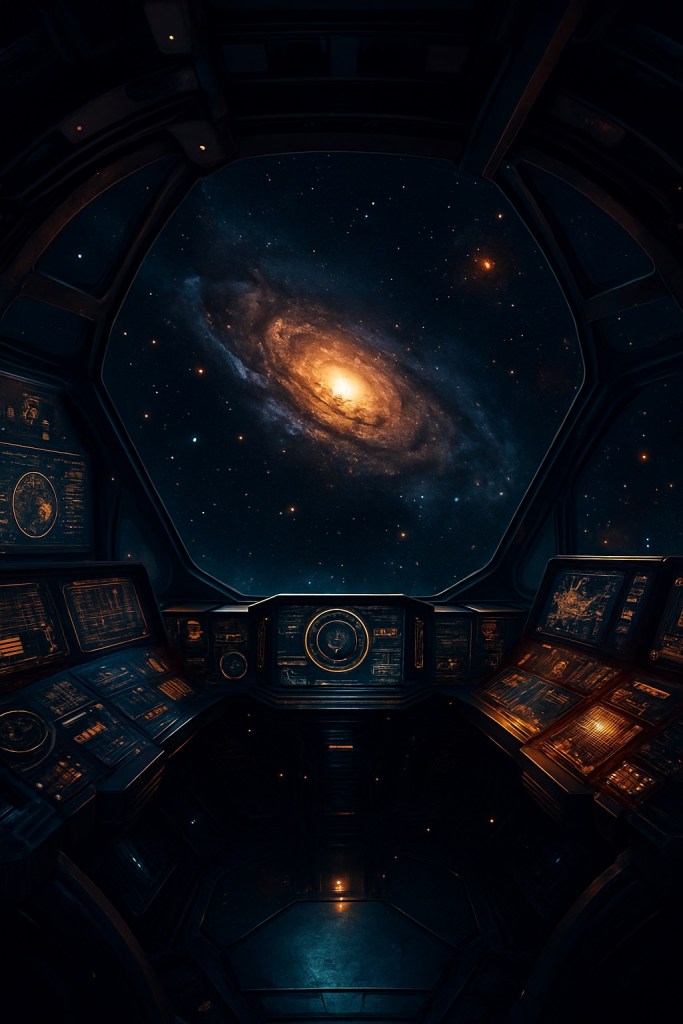
From the earliest drafts of Galaxy’s Child, my goal was to bring every scene to life for the reader to picture, not just through what happens, but through how it’s described. I didn’t want to overwhelm readers with jargon or vague futuristic buzzwords. I wanted them to see the flicker of indicator lights, feel the hum of the engine under the pilot’s seat, sense the stillness of space just beyond the glass. That required more than just imagination, it required precise description.
Clarity doesn’t mean simplicity. It means intentional guidance. As a writer, I see it as my job to set the scene quickly and clearly and show what the character sees, hears, or feels. I wanted to keep the language immersive but accessible and balance description with pacing. Especially in a genre that can be technically dense or visually complex, I believe the writer needs to do a little more heavy lifting. After all, the reader is trusting you to take them somewhere they’ve never been before. Whether I was writing about the YF-223 fighter, the moon base, or a quiet moment between two characters in a confined space, I asked myself the same question, can the reader picture this? Not in a general way, but vividly. Like they were standing right there. And if the answer was no, I rewrote it. Sometimes again and again. Because for me, visual storytelling isn’t optional in science fiction, it’s the foundation.
A good sci-fi story has cool tech. A great one lets you see it, hear it, and feel it, without losing the characters, emotion, or clarity along the way. That’s what I set out to create with Galaxy’s Child. Not just a story of the future, but a future you could experience. And if even one reader puts the book down and says, “I could see it all,” then all the extra effort was worth it. Especially when your wife (who is not a science fiction enthusiast like me) finishes proofreading your manuscript, looks up with amazement, and says she was able to picture every scene with realistic clarity. At that moment, I knew I had something big.

